Jade Journal | Published September 2, 2026 | Reviewed by Yufu Jade Editorial Team
Double-Sided vs Single-Sided Jade Plaques: Where Does the Value Difference Come From?
Understand how reverse carving, material use, design continuity and labour affect the value of double-sided jade plaques.
Double-sided carving sounds automatically more valuable, but the real question is what the reverse adds. A second image can be a meaningful extension of the design, or it can be shallow decoration that does little for the piece.
What you are paying for
A double-sided plaque usually involves more design planning, more carving time and greater control over material thickness. The carver must protect the edges and keep both faces readable without weakening the body. When the two sides share a visual story, the work becomes more than a front image plus a back image.
The Jiangnan landscape as a real example
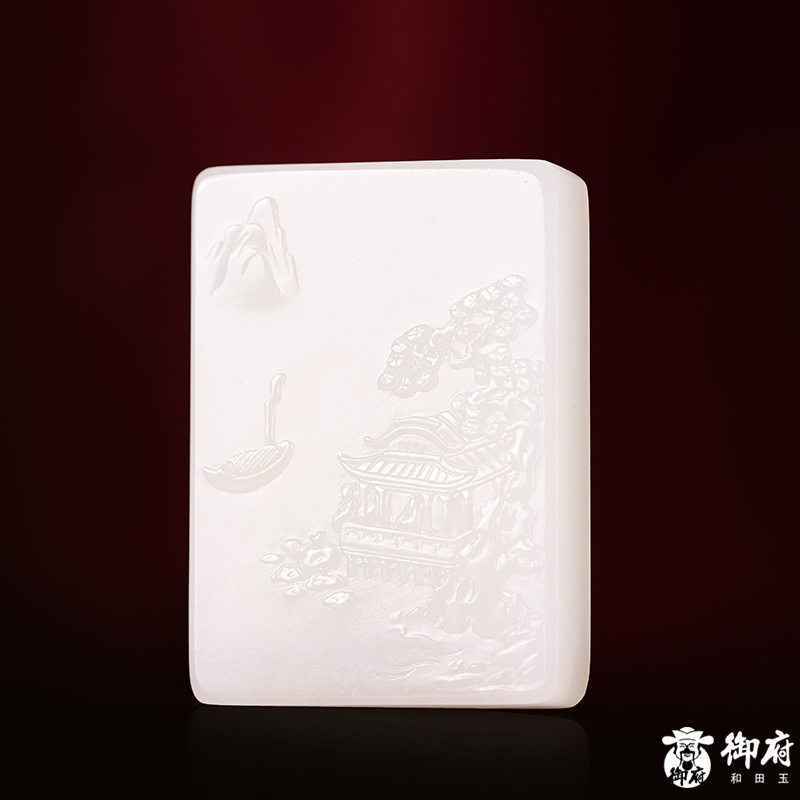
Our 32.5 g Jiangnan landscape plaque continues the view across the reverse. Willow branches, lotus leaves and a rustic pavilion are arranged with a quiet, continuous rhythm. That continuity gives the wearer something to inspect when the plaque turns, and it helps the work feel complete from more than one angle.
When a single-sided plaque is the better choice
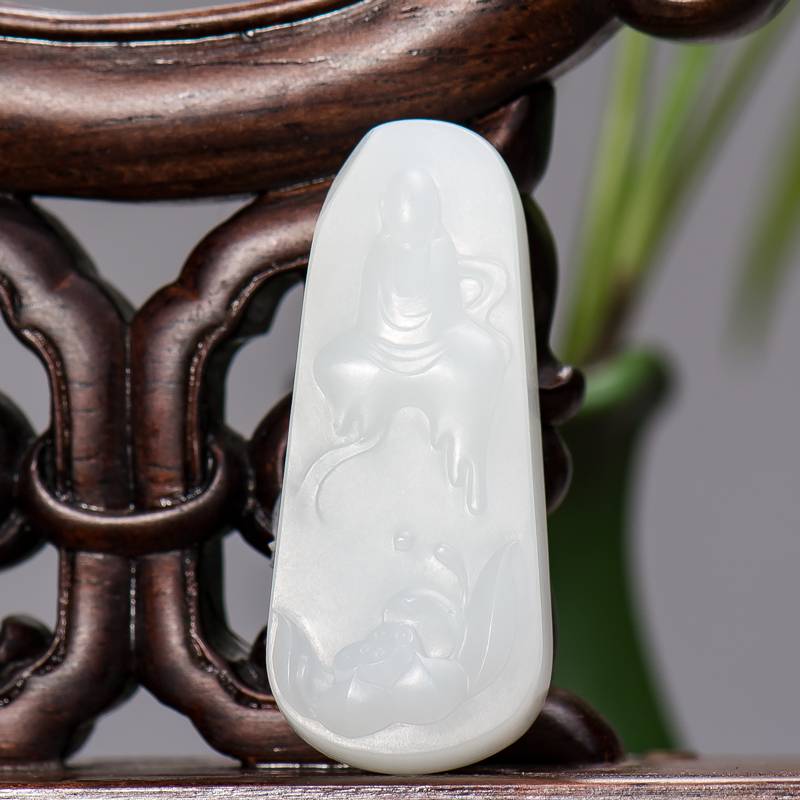
A single-sided peace plaque can be more comfortable, more affordable and easier to read at a glance. The 10.5 g gold-skin wushi plaque keeps the focus on its white body and retained golden skin. A simple design also leaves more of the natural material visible, which many buyers prefer for daily wear.
Compare the quality of the reverse, the relief depth, edge strength and the way the design uses the stone. Double-sided is a useful feature, not a substitute for fine material or careful workmanship.